
We are an independent non-profit devoted to helping people and policymakers understand the tax system. Through research, public education and collaboration, our goal is to advance a tax system that promotes economic growth, shared prosperity and tax fairness.

This mom’s three-year battle for disability tax credit reveals a support system in crisis
Foggoa is persistent, but any one of those barriers would prompt most of us to abandon the process. And in fact, just 17 per cent of those who start the digital application process for the DTC actually finish and press “send,” according to new research from the Canadian Tax Observatory.

A snapshot of new disability research
The good news is: the government has recognized that the process was not working properly and wants to do something about it. The bad news, however, is it’s just not enough to resolve the persistent poverty found among people with disabilities.

The Productivity Mega Deduction: the benefits, the risks and the many outstanding questions
Calling it a “deduction” understates the scale of the change. Here’s an explainer and analysis by the Observatory’s senior economist Jean-François Ruel

The Fair and Accountable Canadian Taxation (FACT) Partnership is a new collaboration bringing together academics and public policy practitioners to inform and deepen Canada’s discussions about fair taxation.
Researchers at the University of Calgary, Carleton University and Universite de Sherbrooke are working with the Canadian Tax Observatory and Social Capital Partners to produce and share rigorous research and accessible evidence on the fairness and accountability of Canada’s tax system.
The three-year collaboration is partly funded by the Social Sciences and Humanities Research Council. Our first package of material proposes a new framework to evaluate the full value of changes in the tax system.

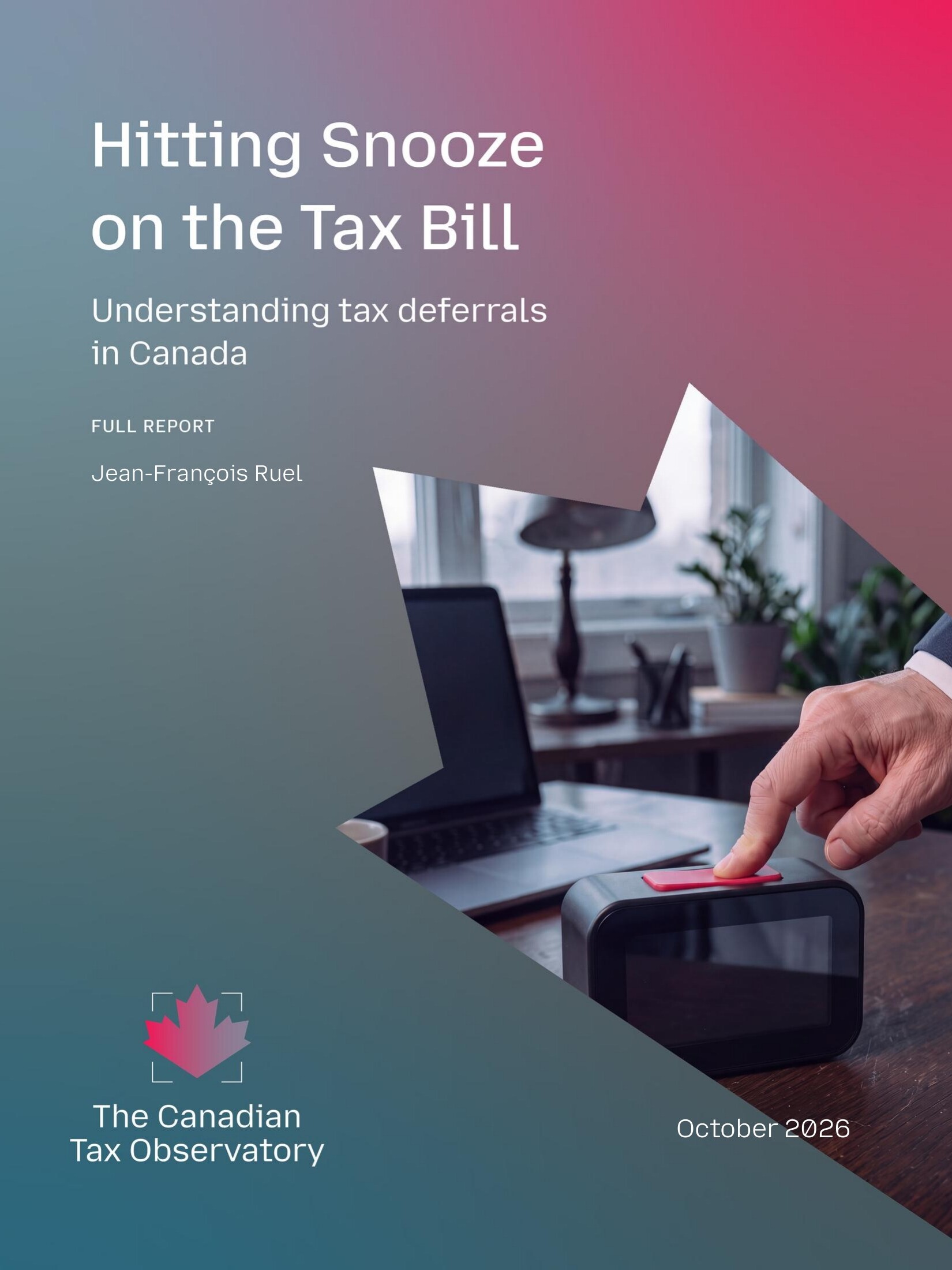
Hitting Snooze on the Tax Bill: Understanding tax deferrals in Canada
Tax deferrals let Canadians act now and pay tax later, but they don’t always serve their purpose. Hitting Snooze on the Tax Bill sorts Canada’s tax deferrals into seven families and sets out where closer scrutiny is needed: capital gains, passive corporate investments and estate arrangements.
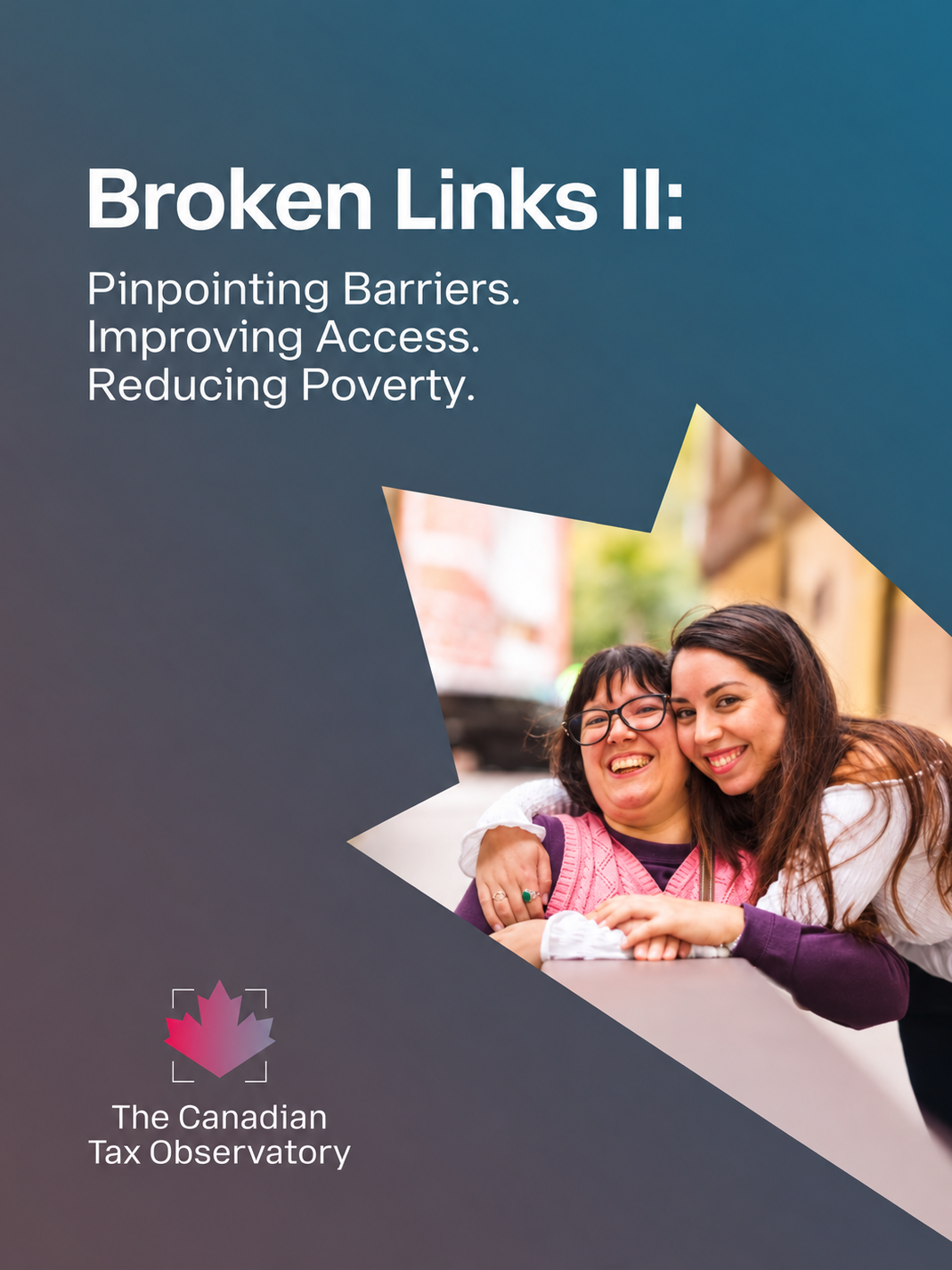
Broken Links II: Pinpointing Barriers. Improving Access. Reducing Poverty.
Broken Links II brings together two new reports on the Disability Tax Credit. The first maps 10 barriers that stop people from completing their application; the second models how automatic eligibility could lift up to 53,000 people out of poverty.


Get in Touch
Have feedback on the work we are doing? Interested in collaborating? We want to hear from you.