
Prime Minister Mark Carney chose his words well to describe this shocking moment in Canada’s economy.
“Rupture” is an apt way to describe what’s overwhelming us, with tariffs undercutting our exports, weak growth taking a toll on the job market and uncertainty undermining long-term investment.
“What’s going on is not a transition. It’s a rupture, and its effect will be profound,” Carney said last week, and echoed a couple of times since.
But it’s worth paying attention to the systemic problems that hover in the background giving the forces of “rupture” fertile ground – especially our convoluted, archaic and often distorted tax system that affects each and every one of us, daily, compounding slow growth, inequality and uncertain prospects for young people.
That’s why I’ve decided to join, lead and build the Canadian Tax Observatory – a new, independent, non-profit think tank dedicated to research and public engagement around tax policy.

That’s why I’ve decided to join, lead and build the Canadian Tax Observatory – a new, independent, non-profit think tank dedicated to research and public engagement around tax policy.
We will look hard, and closely, at the puzzling array of tax codes and measures already in play. And we will have an eye to finding more efficient and accessible ways to foster not just economic growth but also to confront inequality.
For sure, taxation comes up in the “rupture” conversation once in a while.
When Carney is asked how Canada will pay for the support for industries hit by American tariffs, he mostly focuses on government cuts, downplaying the role that taxation plays in covering rising government costs.
When the chattering class discusses how to finance Canada’s enormous new defence commitments, there’s an esoteric mention here and there about a dedicated tax to help fund it all, but little specificity on how to improve the tax system in a concrete way.
Carney himself has committed to tax reform. Recognizing that fair taxation is necessary to protect public institutions, the Liberal platform committed to review the system through the lenses of fairness, transparency, simplicity, sustainability and competitiveness.
That won’t be a simple exercise. It’s been decades since Canada had a holistic look at the tax system, even though the federal government alone collected $382 billion just last year.
Tax, of course, is a tool to pay for government services, but it is also a way to reward or penalize economic behaviour based on the political priorities of the day. And because every person has an opinion on taxes—usually a strong opinion—it’s rare to find a politician who dares to take a critical eye to a system built on favours.
The work needs to start now, and that’s where the Observatory comes in.
As the name suggests, the Canadian Tax Observatory will observe Canadian taxation. But that’s far from a passive exercise.
By digging deep into the data around income, wealth inequality, real estate, inheritance, investment, boutique tax incentives, tax evasion, deficits, debt, income distribution and prosperity, we aim to drive a nuanced, national discussion about what kind of economy we want in Canada—and how to pay for it in an equitable way.
Taxation can’t just be a tool to finance defence and bail out industries hurt by tariffs. It’s a complicated puzzle with many interlocking pieces that, if strategically arranged, can address inequality, foster growth, encourage innovation and enable progress in the face of climbing deficits, lackluster investment and global uncertainty.
There are no easy answers, but that doesn’t mean there are no answers. Here’s a chance to dig in—with all the data and analysis that high tech and smart brains will allow—to do solid research and push collaboratively towards solutions.
I hope you’ll join me.
– Heather
Related reading
Rethinking Canada’s Tax System: What Works, What Doesn’t, What’s Next
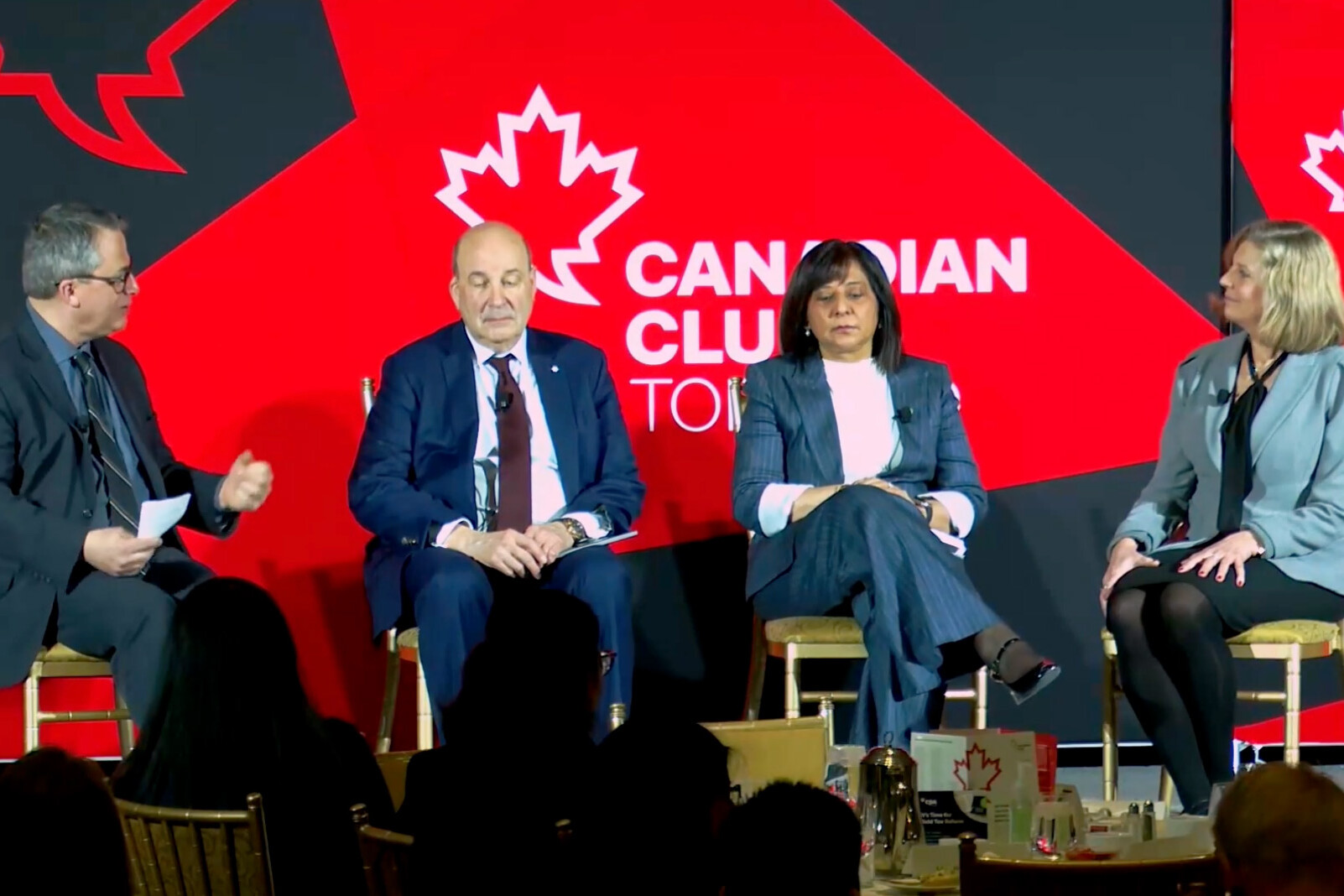
The Canadian Club of Toronto hosted a panel on rethinking Canada’s tax system (what works, what doesn’t, what’s next), featuring the Canadian Tax Observatory’s Heather Scoffield, Deloitte’s Fatima Laher and the University of Calgary’s Jack Mintz. Moderated by Patrick Brethour of the Globe and Mail. Here’s a recording.

Heather Scoffield talks the U.S. Federal Reserve on TVO’s The Rundown
What happens to Canada’s approach to monetary policy when the world’s most powerful central bank, the U.S. Federal Reserve, is in turbulent times? Heather Scoffield breaks it down here for The Rundown on TVO.

Three things Canadians should know about Carney’s new GST credit
The House of Commons has agreed to fast-track legislation to boost the GST credit for 12 million taxpayers with low and modest incomes. Here’s Heather Scoffield’s initial analysis of the measure.
Get in Touch
Have feedback on the work we are doing? Interested in collaborating? We want to hear from you.