
By Shirley Tillotson, Professor of history at Dalhousie University; expert advisor at the Canadian Tax Observatory | A version of this piece was originally published in the Halifax Examiner, February 25, 2026
Mark Carney wasn’t the only one making a splash in Davos. So were some 400 of the world’s millionaires and billionaires.
They were out in full force asking for governments to tax them more.
They know that governments everywhere need more revenue. Especially here in Canada where the turning-away-from-the-U.S. project set out by Prime Minister Carney will require billions in government spending on defence, infrastructure, and social supports.
Perhaps a tax on billionaire wealth (a simple one-off?) would be a good source of some of that money.
But the best tool at our disposal to raise this much-needed revenue is one we are set up already to use: income tax.
“But the income tax is a mess!” you say. Too complex and yet too ineffective at reaching high incomes. Worse, it scarcely touches wealth.
Yes. And yet. Let’s revisit the origins of the federal income taxes in North America. It’s a thought-provoking story of how an old tax, one crippled by many years of evasion, led to a fairer tax system.
The old tax was the municipal property tax. In many North American cities, including Toronto, Ottawa, and others in Ontario, property tax had become hopelessly corrupted.
Individual assessors took bribes, but worse, the municipalities attempted and increasingly failed to tax “personalty” – movable assets like jewellery, carriages, boats, and “intangible” assets, such as stocks and bonds.
The full scope of taxable personalty just wasn’t visible with the assessment tools of the day. So municipalities depended on the more easily “seen” homes and goods of the non-investing classes.
Federally, too, the poor, the farmer, and the modest earner paid a disproportionate share of their incomes on customs and excise taxation, the main source of national revenue.
From the 1880s onward, tax protesters clamoured and revolts brewed.
National and international grassroots movements called for taxation of inheritances and of land. Wealth, that is.
Worse, from most millionaires’ perspective, actual socialism was gaining electoral ground.
Public ownership! Confiscation! These were real possibilities.
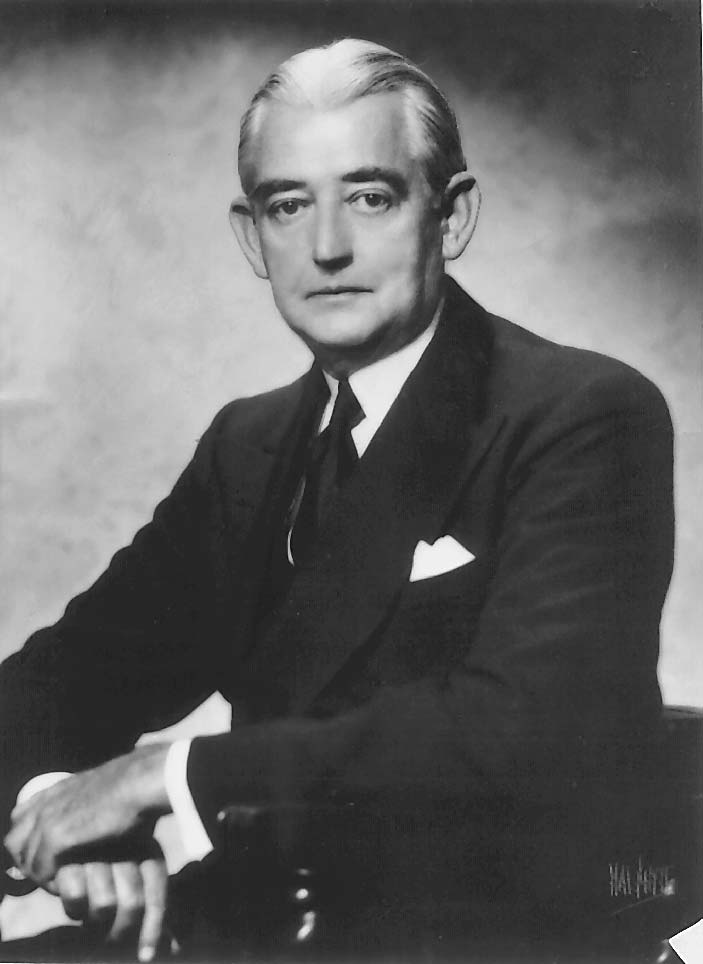
In Canada, fabulously wealthy financier Isaak Walton Killam deplored how slow the feds were to adopt a war income tax. Finally, the one adopted in 1917 was modeled on the 1904 Ontario municipal income tax.
In this context, a well-ordered, mildly progressive-rate tax on upper incomes was, comparatively speaking, not a terrible threat.
By the 1910s, income tax on a national scale was looking like an easy way to spike the socialists’ guns, appease the fretful farmers, and soothe the tariff-oppressed consumer.
Its advocates, both rich and poor, could point to just such a tax that was working well in Ontario. A municipal income tax, on the books since 1866, was resuscitated in 1904, slightly revised, and used to correct for the inequity of the old property tax.
Income tax became a popular proposal for national tax reform, even among the very rich. The leading advocate, economist E.R.A. Seligman, came from a family of millionaire New York bankers.
In Canada, fabulously wealthy financier Isaak Walton Killam deplored how slow the feds were to adopt a war income tax. Finally, the one adopted in 1917 was modeled on the 1904 Ontario municipal income tax.
In the postwar debate, Killam was among those who insisted that the war income tax be continued.
Looking ahead to years of interest payments on the huge war debt, parliament agreed. They decided not to impose wealth taxes (a capital levy or a land value tax), but to keep the war income tax.
As MP William Foster Cockshutt, a millionaire industrialist, said in the House in 1919, he was willing, as all Canadians must be, “to submit to heavy taxation for some years to come.”
Like Seligman, both Cockshutt and Killam knew that, without direct taxation of substantial incomes, the nation’s tax structure was discredited, as the municipalities’ had been.
In 1919, with the recent revolution in Russia and labour revolts in Winnipeg and around the world, a nod to fairness, however modest, was in the interest of security of wealth.
It was not time to reform the polarizing, unreliable tariff. It was the time to do something that had proved feasible in Ontario: tax upper incomes.
Similarly, it is not time now to thoroughly reform our income tax system. It’s time to use familiar tools to do a few straightforward things, things that are widely seen as fair.
Raise the taxable percentage of capital gains. (Yes, try again.) Eliminate tax provisions that disproportionately benefit the top 1%. (Yes, try again.)
Do something. Or wait for the equivalent of 1919.
Related reading

Overview of the Quebec tax system – 2026 edition
An analysis led by Tommy Gagné-Dubé and Suzie St-Cerny for the Research Chair in Taxation and Public Finance at the University of Sherbrooke.
Automatic tax filing: Welcome news for lower-income Canadians, but there’s more to do
By Gillian Petit, senior research associate at the University of Calgary’s department of economics, writing for the Institute for Research on Public Policy.

Rethinking Canada’s Tax System: What Works, What Doesn’t, What’s Next
The Canadian Club of Toronto hosted a panel on rethinking Canada’s tax system (what works, what doesn’t, what’s next), featuring the Canadian Tax Observatory’s Heather Scoffield, Deloitte’s Fatima Laher and the University of Calgary’s Jack Mintz. Moderated by Patrick Brethour of the Globe and Mail. Here’s a recording.
Get in Touch
Have feedback on the work we are doing? Interested in collaborating? We want to hear from you.