
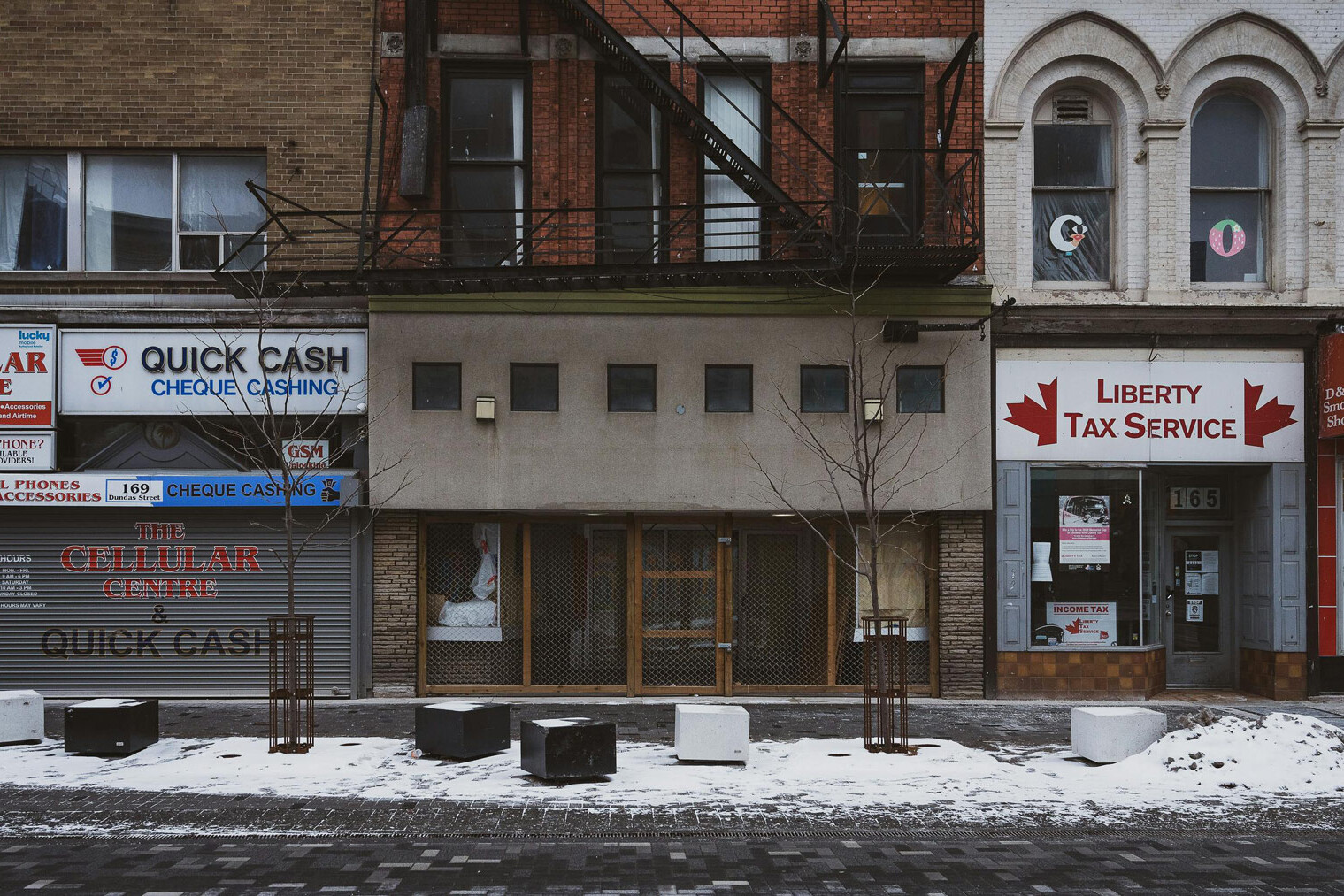
From FACT: Lindsay Tedds on the underground economy. Read on for her remarks and a link to her full brief.

On Oct. 28, 2026, the Senate banking committee asked a question that has bedevilled tax collectors since the beginning of time: why do so many businesses hide their income.

Lindsay Tedds, project director of the Fair and Accountable Canadian Taxation Partnership and professor of economics at the University of Calgary, has some answers. Asked to appear before the committee to discuss Canada’s underground economy, Tedds has filed a brief and a supplementary submission that addresses many of the senators’ questions and proposes some solutions.

“This is less about character than about design,” Tedds told the Standing Senate Committee on Banking, Commerce and the Economy.

Unreported income isn’t much of a problem when it comes to wages. We know that when a third party reports income, as an employer does with a T4 slip, almost all of it gets reported. On the other hand, income known only to the person who earns it, including much self-employment income, is often understated. Data from the U.K. and the U.S. show the same pattern, Tedds says.

“Wage earners aren’t more honest than the contractor renovating your kitchen. Their income is visible to the tax authority,” Tedds explained.

Unreported income isn’t just a problem for the underground economy. The CRA also delivers benefits such as the Canada Child Benefit and the Canada Workers Benefit. That means gaps in income information cost society more than loss of tax revenue: they also cause missed or delayed benefits. Tedds argues that tax collection and benefit delivery should be treated as one system.

Statistics Canada estimates underground activity at $72.4 billion in 2023, or 2.5% of GDP. The CRA puts the net federal tax gap at $34.7 billion for 2022. But Canada’s estimate for small and medium-sized businesses still rests on a 2011 random audit, and researchers can’t access CRA compliance data.

Recommendations include:

– Building ePayroll and platform reporting as shared infrastructure for tax and benefits

– Extending Quebec-style mandatory billing to cash-heavy sectors

– Restoring a published random audit program and giving researchers secure access to CRA data

– Enforcing existing rules for reporting fees for services

– Evaluating the 2021 GST/HST platform rules and the 2024 platform reporting rules, and publishing the results

The supplementary report explains how the Statistics Canada estimate differs from the CRA’s tax gap figures and proposes a federal-provincial compliance working group based on Quebec’s joint construction enforcement committee.

The Canadian Tax Observatory is one of FACT’s partners. Read on for Tedds’ remarks and links to her full brief.

Related reading

taxes-canada

Mistrust of the CRA leaves low-income Canadians missing out on benefits

PM Mark Carney says he wants to issue pre-filled tax forms for those in “simple” tax situations. But “simple” is in the eye of the beholder. In financial terms, “simple” can mean you probably don’t have intricate investments. You likely don’t owe the government money. Nor do you draw your income from multiple sources.

The Productivity Mega Deduction: the benefits, the risks and the many outstanding questions

Calling it a “deduction” understates the scale of the change. Here’s an explainer and analysis by the Observatory’s senior economist Jean-François Ruel

A gradient background blending from bright pink in the top left corner to teal blue in the bottom right, with hints of gray and subtle color transitions throughout.

There is a trade-off behind the new federal government’s income tax cut…

By Noah Zon, Co-Founder and Principal at Springboard Policy, a public policy research and advisory firm.

Get in Touch

Have feedback on the work we are doing? Interested in collaborating? We want to hear from you.

Get in touch

Stay Connected

Through solid, independent research and non-partisan public engagement, we aim to encourage fresh thinking that leads to practical solutions on tax policy.

Subscribe