

Three things Canadians should know about Carney’s new GST credit
By Heather Scoffield | Originally written for the Toronto Star on January 28, 2026
Prime Minister Mark Carney’s new multibillion-dollar top-up to the GST credit to help low-income Canadians afford food and essentials is definitely progress.
By using the existing system to target the sector of the population that needs the most help in making ends meet, the measure is more efficient and fairer than other tax measures that tend to show upon the menu.
But let’s get a few things clear.
First, a technical clarification. The prime minister has framed the enhanced and rebranded GST credit as a way to alleviate the costly grocery bill many households struggle with continually.
In fact, there is no GST on most groceries except snacks. Recipients can spend their new-found money on whatever they want, as the PM himself noted. But since so many of the recipients find that food gobbles up disproportionately large portions of their income, the new credit can help. It’s not nearly as generous as anti-poverty advocates had hoped, but it’s not nothing. It’s $11.7-billion over six years, reaching 12 million people.

Second, the credit is not going to do anything to drive food prices down. Conservative Leader Pierre Poilievre is right about that. Food prices are high in most developed countries these days, but especially high in Canada — for many reasons, including weather, currency and supply chain glitches.
Rather, there’s a separate collection of new funds for the “root causes” — money to address supply chain disruptions, encourage the construction of new greenhouses, produce food close to home and help the Competition Bureau ensure there’s less bad behaviour.
And third, it’s dripping with politics, as you’d expect in a minority government. While the new benefit can be spent on anything at all, the Conservatives and the NDP alike have hammered the Liberals non-stop on food prices. And so that’s the framing — putting the opposition on the spot.
But it is progress all the same, mainly because it’s a concrete acknowledgment of the bread-and-butter hardships that a growing percentage of the Canadian population is feeling — a policy-oriented recognition that was scarce in the federal budget and what has been hard to hear in Carney’s response to the chaos that is U.S. President Donald Trump.
To be clear, there’s no expectation that Carney be warm and fuzzy. The closest he got to public emoting was the hug he gave to the Bonhomme Carnaval last week in Quebec City. He is a charts-and-graphs fan who writes his own literary references into his speeches.
(Indeed, at his news conference on Monday, he spontaneously used his hands to make a graph to explain that the total cost of the tax rebate measure was the delta between the change in overall inflation and the change in food inflation since the end of the pandemic.)
But the charts and graphs from pollsters have continually shown that Canadians are just as concerned about job security, economic stability and making ends meet as they are about Trump.
They’re related, of course. But Carney has not really connected the dots very well until now. His focus has been institutional investors, big business, and foreign leaders.
“The world is knocking at our door, and momentum is building. But as the Minister of Finance just said, the biggest payoffs will take time,” Carney said on Monday with Finance Minister Francois-Philippe Champagne at his side. “And many Canadians are feeling the pressures right now of everyday expenses. Canadians need a boost today and a bridge to tomorrow.”
Central in the Carney government’s first budget in November was a plan to use federal tools and its balance sheet to drive $1 trillion in capital investment in Canadian infrastructure over the course of five years.
He has been aggressive on committing to defence spending, and aggressive on diversifying Canadian trade away from the United States.
And as we all know, he has won praise around the world for vowing to build networks of middle powers — a “third way” to navigate through the antagonism that the United States and China bring to international relations.
With the enhanced GST credit, now branded the Canada Groceries and Essentials Benefit, the Carney government signals it knows it can’t get from here to there without ensuring Canadians at all levels of wealth and income are in solid shape.
“The world is knocking at our door, and momentum is building. But as the Minister of Finance just said, the biggest payoffs will take time,” Carney said on Monday with Finance Minister Francois-Philippe Champagne at his side. “And many Canadians are feeling the pressures right now of everyday expenses. Canadians need a boost today and a bridge to tomorrow.”
Yes, they do. Statistics Canada reports that poverty has been creeping up, the ability to make ends meet has declined and wealth inequality was on the rise last year. Those are not the ingredients Canada needs to attract growth and investment, let alone maintain a decent quality of life.
To lock in the benefits of the new measures, Canadians and government both need to build on the progressive measure taken this week.
Canadians need to make sure they file their taxes — even if they haven’t done so in the past, and even if they aren’t paying any tax on a regular basis. This will ensure they’re in the system to receive the federal payouts.
And governments need to figure out the next step in taking on poverty, inequality and paycheques that don’t cover the bills.
As Carney well knows, the tax equivalent of a warm, fuzzy hug with Bonhomme only goes so far.


The Canadian Tax Observatory applauds new tax measures to make life more affordable
The Canadian Tax Observatory welcomes today’s announcement from Prime Minister Mark Carney and Finance Minister François-Philippe Champagne to substantially increase the GST credit, now called the Canada Groceries and Essentials Benefit.
In boosting support for low-income Canadians through the tax system, they are ensuring funds reach the hands of those who need it most — quickly, and also over the longer term.
“The prime minister’s recognition that his investment-oriented budget won’t deliver immediate returns for struggling Canadians is important,” says Heather Scoffield, the Observatory’s CEO. “A key element of Canada standing on its own in today’s turbulent economy is ensuring regular people are able to make ends meet.”
About the Canadian Tax Observatory
Established in 2025, the Canadian Tax Observatory is an independent non-profit devoted to helping people and policymakers understand the tax system. Through research, public education and collaboration, its goal is to advance a tax system that promotes economic growth, shared prosperity and tax fairness. It aims to drive an informed public dialogue in pursuit of practical taxation that benefits all Canadians. Through solid, independent research and non-partisan public engagement, we encourage fresh thinking that leads to practical solutions on tax policy. The founding CEO is Heather Scoffield, whose expertise lies in informing and driving national conversations on economic policy.
For more information, please contact:
Heather Scoffield
CEO
heather@canadiantaxobservatory.ca
613-314-1198
Find me on LinkedIn | X | Substack

Global minimum tax, and America’s message to the world: Trust us — as if
By Heather Scoffield | Originally written for the Toronto Star on January 17, 2026
From a distance, it looks like a dirty trick.
The United States leads the world into a negotiation for a global minimum tax. Eventually, painfully, everyone agrees to a complicated, finely-balanced pact that would ensure big multinational corporations all pay at least 15 per cent in taxes.
The goal is a global level playing field and an end to the tax-slashing race to the bottom to attract business.
At the last moment, the U.S. demands and is granted exemptions for its own — the biggest, most powerful companies in the world. And 147 other countries are left wondering whether the pact they’re signing is worth the paper it’s written on.
But sign, they do — mainly to salvage what they can from years of arcane wordsmithing in the hopes of preserving their own tax bases and sidelining global tax havens.
It’s come to this.
In a Donald Trump world where the U.S. routinely bails from international agreements, ignores longstanding rules of engagement and storms ahead in its own interests oblivious of the consequences, convincing Canada and other supporters of the global minimum tax to allow an America-friendly side-agreement seems almost quaint.
But it’s serious business that implicates Canada’s scope to preserve its tax base, compete and share the proceeds.
The global minimum tax talks actually started out on a note of optimism and American leadership.

While many countries had long decried multinational companies’ crafty use of the low- or no-tax rates in some jurisdictions, the campaign to end tax avoidance took a major leap forward in 2021 when then-U.S. Treasury Secretary Janet Yellen threw her considerable influence behind gritty discussions at the Organization for Economic Cooperation and Development.
Canada’s then-finance minister Chrystia Freeland was a close ally, agreeing wholeheartedly with Yellen that a worldwide floor for corporate tax would stymie a global race to the bottom, allow Canada to maintain its corporate tax base and benefit workers with a fairer tax system.
But Canada also hedged its bets, just in case the complex OECD talks didn’t work out. Freeland announced a parallel Digital Services Tax to target large, multinational digital companies active in Canada. As the global talks stumbled, Canada enacted the DST in 2024, making it retroactive to 2022.
As we know, that plan never materialized — going toe-to-toe with Trump’s agenda and losing. And it’s that altercation which can explain the compromises that led to today’s arrangement.
The key moment was last June, just as the DST was about to take effect.
Trump showed up at the G7 summit in Kananaskis, Alta., armed with the dreaded Section 899 of the One Beautiful Bill Act — also known as the “revenge tax.” Countries that embraced the global minimum tax agreement, and especially those who adopted their own DSTs, would face retaliatory high tax rates on individuals making money in the United States.
Under intense pressure from their business communities, the G7 stood down, Canada nixed its DST, and the G7 instead offered up a special arrangement for American companies. Trump removed the revenge tax provision, and the U.S. returned to the global minimum tax table.
And here we are, telling ourselves we’re lucky that the U.S. agreed to anything at all.
The so-called side-by-side agreement announced this month is designed to recognize U.S. arguments that its corporate tax system is fine as it is since it already mirrors what everyone else has signed on to in the main agreement. It doesn’t recognize the U.S. by name, but they’re the only ones who qualify.
The so-called side-by-side agreement announced this month is designed to recognize U.S. arguments that its corporate tax system is fine as it is since it already mirrors what everyone else has signed on to in the main agreement. It doesn’t recognize the U.S. by name, but they’re the only ones who qualify.
Treasury Secretary Scott Bessent hailed it as “a historic victory in preserving U.S. sovereignty and protecting American workers and businesses from extraterritorial overreach.”
It may be a side quest for the U.S., but there are significant implications for the rest of the world — especially since the severe disruption in the global economy means Canada and many other countries are parched for investment and are actively redesigning their investment incentives to be more aggressive.
To be sure, the new package gives Canada some stability as it goes about the hunt for private-sector dollars. And perhaps, if the overall agreement works as intended, tax haven countries will rein in their competitive tax-slashing.
But the side deal gives leeway to the U.S. to decide for itself, at least in some instances, what counts and what doesn’t in the calculation of tax. And it leaves Big Tech and other American corporations alone to continue as they have been, booking up to half their foreign profits in tax havens, according to the EU Tax Observatory.
Meanwhile, the overall deal that Canada is signing on to means tax is no longer much of a tool to attract investment. We do have other, more effective tools — subsidies, predictability, rule of law, and industrial policy writ large. It could be a lot worse.
But it’s not clear the Americans will constrain themselves accordingly. The understood message from America is: trust us.
As if.

The Canadian Tax Observatory welcomes powerhouse advisory committee of experts
Today, the Canadian Tax Observatory announced the nine prominent tax thinkers who will form its founding expert advisory committee.
“I’m looking forward to working with this impressive group to guide the Observatory’s ambitious strategy and research agenda to advance fair taxation in Canada,” says CEO Heather Scoffield. “Taxation issues are complex and multilayered. This team reflects that, with deep expertise across academia, policymaking, tax law, accounting, economics and investment.”
The committee will meet twice a year and provide frequent consultation to guide the Observatory’s expert analysis and public engagement. Drawing on their diverse perspectives and experience, they will inform a rigorous and sophisticated approach to understanding the real-world implications of tax policy on Canadians’ economic lives.
L’Observatoire canadien de la fiscalité a dévoilé aujourd’hui les noms des neuf éminents spécialistes de la fiscalité qui composeront son nouveau comité d’experts.
« Je me réjouis à la perspective de travailler avec un groupe d’une telle envergure, qui accompagnera l’Observatoire dans ses ambitions et contribuera à orienter sa stratégie et ses travaux de recherche en faveur de l’équité fiscale au Canada », indique la cheffe de la direction, Heather Scoffield. « Les enjeux liés à la fiscalité sont complexes et pluridimensionnels. La composition de cette équipe en est l’illustration, puisqu’elle rassemble de grands spécialistes issus du monde universitaire et des domaines des politiques publiques, du droit fiscal, de la comptabilité, de l’économie et des placements. »
Le comité se réunira deux fois par an et conseillera fréquemment l’Observatoire dans ses analyses spécialisées et ses interventions auprès du public. La diversité des points de vue et des expériences de ses membres nourrira une réflexion rigoureuse et éclairée sur l’impact de la politique fiscale sur la vie économique des Canadiens.
Advisory Committee Members

David Duff
Professor of Law and Director of the Tax LLM program at the Peter A. Allard School of Law at the University of British Columbia.

Antoine Genest-Gregoire
Assistant Professor of the Department of Taxation at the University of Sherbrooke and a researcher under its Research Chair in Taxation and Public Finance

Anish Makim
Partner at ExCap Advisors and a senior business advisor in Canada’s telecommunications sector

Kevin Milligan
Professor and Director of the Vancouver School of Economics at the University of British Columbia and Research Associate of the National Bureau of Economic Research
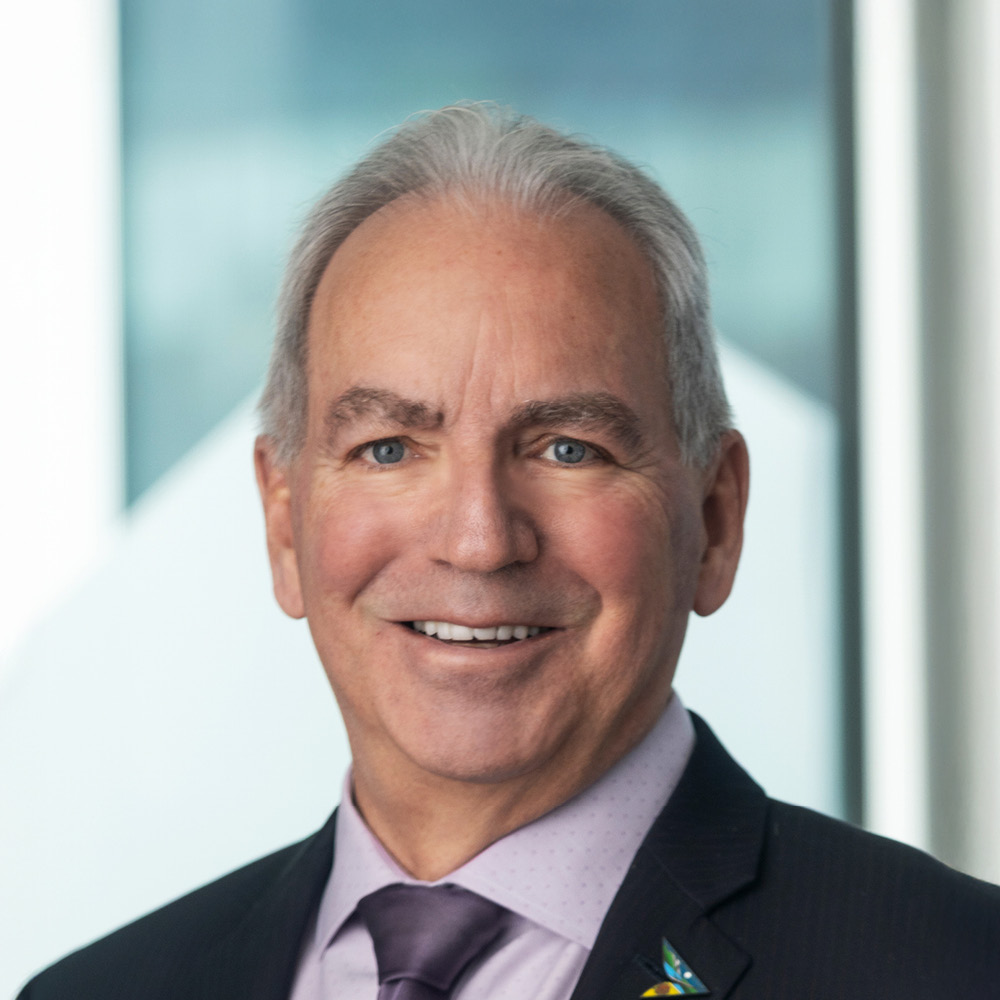
Carman McNary
Tax and corporate lawyer at Dentons Canada LLP, providing strategic advice to companies and their boards, First Nations and FN business groups, non-profit and charitable organizations

Elena Patel
Co-Director of the Urban-Brookings Tax Policy Center, the Pozen Director’s Chair, and a Senior Fellow in Economic Studies at the Brookings Institution

Sandra Rosier
Tax advisor and, lawyer; and Founder and principal at Rosier Tax Advisory, which provides tax counsel to pension funds, global asset managers and financial institutions

Charles St-Arnaud
Chief Economist at Servus Credit Union

Shirley Tillotson
Professor of History at Dalhousie University and author of award-winning Give and Take: The Citizen-Taxpayer and the Rise of Canadian Democracy
For more information, contact:
Heather Scoffield, CEO
The Canadian Tax Observatory
heather@canadiantaxobservatory.ca
Cell: 613-314-1198
Shirley Tillotson
CTO
Dr. Shirley Tillotson is Professor of History at Dalhousie University. She was the 2019 recipient of the Governor General’s History Award for Scholarly Research for her book, Give and Take: The Citizen-Taxpayer and the Rise of Canadian Democracy. This, and her other work on Canadian tax history, are part of her general research interest as a historian in the tissue of connections between the institutions of government and the relationships of daily life and civil society. In addition to continuing scholarly research, she has, since her retirement from the classroom, brought a Canadian historical perspective to journalism and social media conversations.
Charles St-Arnaud
CTO
Charles St-Arnaud is Chief Economist at Servus Credit Union. He has more than 20 years of experience as an economist in the public and private sector, both in Canada and internationally. Before joining Servus, he was Chief Economist at Alberta Central. Before that, Charles focused on global financial markets as Senior Investment Strategist at Lombard Odier Investment Manager in London, England, and as Senior Economist and FX Strategist at Nomura International in New York City and London.
Charles was at the Department of Finance in Ottawa during the global financial crisis, where he advised senior officials. He also worked for the Bank of Canada and Morgan Stanley. He is a regular contributor to the Financial Post, The Globe andMail, BNN Bloomberg, CBC/Radio-Canada and the Calgary Herald. Charles holds an MSc in Economics from the Université du Québec à Montréal.
Sandra Rosier
CTO
Sandra Rosier is a tax advisor, lawyer and Founder and Principal at Rosier Tax Advisory, which provides tax counsel to pension funds, global asset managers and financial institutions. Prior to starting her own practice, Sandra was Global Head of Tax at BGO, where she oversaw the tax function. Previously, she was Managing Director of Tax in the finance group at CPP Investments. Sandra started her career in private practice at McCarthy Tétrault LLP and Ropes & Gray LLP. She holds a J.D. from the University of Ottawa and is a member of the Law Society of Ontario and the Massachusetts Bar.
Elena Patel
CTO
Elena Patel is Co-Director of the Urban-Brookings Tax Policy Center, the Pozen Director’s Chair and a Senior Fellow in Economic Studies at the Brookings Institution. Her research examines how tax systems, health programs and social safety nets shape economic behaviour and well-being. She studies how tax policy affects investment and capital accumulation, how incentives and risks influence employment decisions and how governance and health policy intersect with labour markets and economic security.
Elena also serves as a Fiscal Policy Impact Scholar at the University of Utah’s Marriner S. Eccles Institute. Previously, she was the Sorenson Assistant Professor at the University of Utah’s David Eccles School of Business and held several federal government positions, including serving as Senior Public Finance Economist at the White House Council of Economic Advisers and as an economist at the U.S. Treasury. She holds a Ph.D. in Economics from the University of Michigan.
Kevin Milligan
CTO
Kevin Milligan is Professor and Director of the Vancouver School of Economics at the University of British Columbia and Research Associate of the National Bureau of Economic Research. Since 2011, he has served as Co-Editor of the Canadian Tax Journal. He studied at Queen’s University and the University of Toronto, receiving his Ph.D. in 2001. His published research in over 100 articles spans the fields of public and labour economics, with a primary focus on how the Canadian tax and transfer system affects economic decisions and well-being. In 2020-21, he served as Special Advisor (Economic Recovery) in Canada’s Privy Council Office.
Carman McNary
CTO
Carman McNary practices tax and corporate law at Dentons Canada LLP, providing strategic advice to companies and their boards, First Nations and FN Business groups, non-profit and charitable organizations. He taught tax law at the Faculty of Law, University of Alberta and has written and presented extensively on tax matters and policy. Carman was previously Managing Partner (Edmonton office) and National Tax Lead (Canada).
Beyond law, he completed the Director Education Program and the Global Competent Boards ESG designation, and has chaired and served on a wide variety of corporations, community and non-profit entities and organizations. He currently serves as Chair of Edmonton Airports, Vice Chair of the Canadian Chamber of Commerce and as chair or director on the board of several private companies. Carman also served as an officer in the Royal Canadian Navy from 1975 – 2008, retiring with the rank of Captain (Navy).