

Mark Carney’s budget is a big bet. It will take years to see if it pays off
By Heather Scoffield | The Toronto Star
The news junkies who tend to drive political chatter have come away disappointed after Mark Carney’s first budget this week.
They (OK, we) were underwhelmed — there were no surprises, the budget was pretty much as advertised, and the previously-touted big sacrifices at the altar of economic overhaul were things we already knew were coming.
Here’s a news flash: the budget is not for the finance junkies, not really.
It’s for the public, and in this age of nasty U-turns, disruption and volatility, the predictable nature of Budget 2025 is one of its strongest points.
For a budget to have staying power, it’s not enough to wow those who are hooked on the adrenalin of receiving a list of shiny political objects.
Rather, a budget’s long-term success depends on bringing the public along, and building trust with the very households, corporations and organizations the government needs to implement its budget decisions.
That is especially true of this one.
A budget’s long-term success depends on bringing the public along, and building trust with the very households, corporations and organizations the government needs to implement its budget decisions.

Over the past few weeks, Carney let it be known that his first budget would dramatically ramp up defence spending, finance home-building, lean in to infrastructure and favour help for business over social programs.
He also primed the public for larger deficits and government layoffs.
But the work of building up the trust that will ensure this budget turns into a long-term plan to whip the Canadian economy into shape has only just begun. For this budget to truly succeed, Carney will need to marshal public support at every single step, because it’s not at all obvious that regular Canadians stand to benefit.
For one, the payoff for the public of this “supercharging” exercise (as the Liberals dubbed their revival plan for the economy) is a very long way away — even if everything goes according to plan.
As Carney and Finance Minister Francois-Philippe Champagne pitch it, there’s a chain reaction that is required to face down the changed economic reality of 2025, and its foundations are in this week’s budget. It’s a big bet that requires a lot of moving parts to come together, with the hope that the benefits will eventually flow to all corners of the Canadian economy.
First, the government borrows billions of dollars for capital investment.
The deficit balloons, and the government uses that money and money already baked into the fiscal framework to pull together almost $500-billion in cash, tax breaks, lending and long-term commitments, all in an effort to expand the ability of the Canadian economy to produce goods and services.
Then, it sets up new structures or reforms old structures, streamlines regulations, absorbs some risk and spices up tax incentives to get that money out into the world.
At that point, the private sector is expected to step up with $500-billion of their own, investing to take advantage of the opportunities the government has fostered.
Along the way, the companies and government entities leading the way on “supercharging” will presumably hire people, pay them good wages, enhance their training and boost everyone’s productivity.
That’s the plan anyway.
“The short-term effect of those projects is thousands of good jobs in construction, the trades and logistics,” Carney said Wednesday in a post-budget news conference at a public transit yard in Ottawa. “The longer-term effect is high-paying fulfilling careers with recurring contracts year after year. That is what a trillion dollars in investment builds.”
The end goal is a Canadian economy that is less dependent on the United States, more efficient and competitive around the world, and able to resume a steady pace of growth.
This is a far cry from the Keynesian approach to economic revival that we are familiar with, and that Canadians at least sort of believe has worked in the past
The era of government spending on job creation, directly using its spending power to juice up consumption and economic activity, has been replaced — in Canada and elsewhere — by a morphing definition of industrial policy that takes aim at leveraging private sector investment to boost productivity.
“Industrial policy, once seen as secondary to market forces, is returning to the forefront,” the budget confirms.
Regular Canadians could benefit if and when the new-found productivity produces jobs, higher wages and broad economic growth.
Carney had some thoughtful remarks about this approach to economic policy when he was in Asia a few days before tabling the budget. With geopolitics and technology fundamentally changing the way the world works, clinging to the economic equations of the past won’t suffice.
“At the core of this will be a new partnership between government and business at the service of our fellow citizens,” he said.
The central bank is down for the supply-side, productivity-enhancing approach too.
“We’ve over-relied on priming demand and not spent enough time on the tougher decisions of structural reform and making the investments that we need to actually grow the economy over the long term,” Bank of Canada Governor Tiff Macklem said in an interview with Bloomberg at the end of September.
That appears to be what Carney is banking on. And for sure, this could all happen and the prime minister’s plan could work. We can hope.
But it could just as easily not happen, especially since investors have not responded en masse in the past to many years of incentivizing, competitive taxation, subsidies and blatant pleading of all kinds.
That’s where government building trust with the public becomes essential. The rewards of this plan, if they materialize as hoped, are far off in the distance. We don’t really know who will reap the benefits or how — or even whether — they will trickle down. The subtext of Carney’s budget is “please be patient.”
The public is being asked to trust that Carney’s plan will prompt investors to change course, put billions of dollars into changing how Canada’s economy works, and stick around for the long term.
It’s an enormous ask, even if Carney hasn’t spelled it out clearly.
In the lead-up to the budget, Carney took the rare step of addressing Canadians on prime-time television, warning us that we will be asked to make sacrifices.
He took some political heat in the days after that speech for not naming those sacrifices.
The obvious answer is that he was referring to the budget’s cuts to the public service. But there’s a more subtle answer contained in the budget that applies more broadly: an economy that will see no growth this year.
Economic growth in Canada was already tepid in recent years. But the tariff battle with the United States has erased even that growth, setting Canada on a growth trajectory that is 1.8 per cent below where it would have been.
That’s unless we do things very differently, and that process has only just begun.
Canadians don’t yet know who will be paying the price for the change in geopolitics that is roiling us, beyond the workers in the industries that have been hit hard and directly by American tariffs. We haven’t yet had the difficult political conversation about how to cushion the blow for those who are side-swiped and how to share the wealth of those who prosper.
Despite what pundits may say, Carney and Champagne were wise to ease the public into their plan by rolling it out piece by piece before budget day was upon us.
But preparing the public was only one step of many. They will also have to sustain their trust-building measures for the long term if they want to both persuade private investors to find $500 billion and put it to good use in Canada, and for voters give them time to set Canada on a new path.
In his speech in Asia, Carney had some other “wise words” that he meant as advice to world leaders but could be applied to his own government right now.
He quoted an Indonesian leader who said, according to Carney: “Growth that excludes is growth that divides …. Division causes instability, and instability is not conduce to peace and prosperity.”
Carney added: “And we’re here, of course, for peace and prosperity.”
Yes, we are. But that’s going to mean some long, hard work by government and business alike to build trust. It’s a complex bet on how to fix Canada’s future that has only just begun to take shape.


Carney’s first budget: a trillion-dollar investment goal propped up by capital spending
By Heather Scoffield
Mark Carney promised us the world in the lead-up to his first budget as prime minister – a generational, Canada-first plan that would set us all up for a prosperous future.
What he delivered was HIS world.
Thanks for reading! Subscribe for free to receive new posts and support my work.
Investment—driven by the government, and then partly paid for by the private sector if things go according to plan—is at the centre of the November 4 document that boasts it will inject $1 trillion into the economy to bolster growth and productivity over the next five years.
Half of that is paid for by government: there’s $500 billion in government money for infrastructure, defence, home building and other business initiatives, earmarked with the sole purpose of driving an equal amount of investment from the private sector.
By the numbers:
- Expected tax revenue in fiscal year 2025-26: $426.2 billion
- Expected tax revenue by fiscal year 2029-30: $479.8 billion
- Total tax revenue as a percentage of GDP in 2025-26: 13.4%
- Total tax revenue as a percentage of GDP in 2029-30: 13%

Clearly, Carney is not afraid to use the country’s balance sheet to meet the goal.
What’s surprising, perhaps, is his timid use of tax as a tool in this effort—even though taxation is usually one of the first things finance ministers turn to when they’re trying to prod the economy into action. Most of the investment incentives come in the form of capital spending.
They didn’t do nothing on the tax front. Here are some of the main, new tax measures meant to drive growth, productivity and investment in a hurry:
- The tax star of the day is the “productivity super-deduction,” which will allow businesses to write off a broader scope of capital costs more quickly, and is meant to address the competitiveness gap between Canada and the United States. It means about $1.5 billion in foregone revenue over the next five years, and is expected to make a difference to the manufacturing sector and liquified natural gas in particular.
It’s targeted, it doesn’t break the bank and it ensures Canada’s investment terrain remains competitive with the United States.
- Research and development gets a boost too, by expanding access to the Scientific Research and Experimental Development tax incentive, worth almost $300 million over five years.
- For climate, the budget foresees entrenching investment tax credits and extending the timespan for the carbon capture and storage credit to 2035.
- Critical minerals get a tax-related boost through a new provision allowing for flow-through shares which allow shareholders to claim exploration credits that would normally go to corporations.
For regular people and consumers, the budget is mostly a story of removing rather than adding new measures.
- The luxury tax on fancy boats and aircraft, imposed by the previous incarnation of Liberals to target the rich, has been cancelled in the name of helping the aviation and boating industries. The feds will forego $135 million over five years for this.
- The underused housing tax, initially meant to discourage foreigners from buying Canadian houses and driving up prices, has been cancelled in the name of efficiency. The cost is $150 million over five years.
- The budget adds some details around how it plans to remove the burden of filing taxes for those with low income and simple tax situations. The government’s auto-filing plan was announced last month, and the budget explains how it will work. If a low-income person hasn’t filed taxes in the last three years, the Canada Revenue Agency will do it for them based on the information it has. There’s an opt-out provision and an appeal process, and it starts this taxation year – pending changes to legislation.
All in all, the government initiatives are meant to re-orient the Canadian economy to better deal with an unpredictable United States by lighting a productivity fire underneath Canadian companies and encouraging them to expand their focus to global markets.
And we hope those efforts are successful.
But in the meantime, it’s worth paying attention to the chart and table on page 7 of the Impacts Report stuffed at the back of the main budget document. Poverty, the numbers show, is slowly on the rise, especially among single people, lone-parent families and racialized populations.
“These groups often face systemic barriers to financial security, making them more vulnerable to financial instability, food insecurity, and lack of adequate affordable housing,” the report states.
An economic plan that is meant to boldly steer Canada in a different direction can’t do so if it forgets about that 10 per cent of the population.

Baseball metaphors aside, this budget will be game-changing
By Heather Scoffield
By this time next week, the World Series will be behind us and pundits across the land will be liberated from using tortured and gratuitous baseball metaphors to explain and enlighten every element of their thinking.
Instead, we’ll be able to move from the metaphorical to the metaphysical, since we will at last have solid information to work with in the form of the much-anticipated federal budget.
The budget will be a detailed look into Prime Minister Mark Carney’s plans to invigorate the Canadian economy and position it for a new era in a world that is unpredictable, sometimes hostile, and promises far less momentum than we’re used to.
The backdrop to next week’s budget is harsh, and this morning’s smattering of economic news reminds us of some disturbing trends. Statistics Canada reports that Canada’s economy contracted 0.3 per cent in August, erasing July’s gains and setting the third quarter up for essentially no growth. And CN Rail, one of Canada’s largest companies, says it is scaling back its capital investment plans by $600 million.
What Carney does or doesn’t do on taxation is central, of course, since tax pays for public services and serves as a tool to engineer the economy – rewarding some behaviours and discouraging others.
Statistics Canada reports that Canada’s economy contracted 0.3 per cent in August, erasing July’s gains and setting the third quarter up for essentially no growth. And CN Rail, one of Canada’s largest companies, says it is scaling back its capital investment plans by $600 million.

What I’ll be watching for in the 2025 federal budget
Fresh results
For the fiscal year that ended in March 2024, the federal government collected $382 billion from Canadians through personal income tax, corporate tax, goods and services tax, excise duties and other smaller taxes.
Federal tax in 2023-24 amounted to 13.0 per cent of Canada’s GDP, which is fairly average over the course of the past few decades but higher than the 11.4 per cent collected in fiscal 2011-12 and lower than the 14.4 per cent in fiscal 2000-01.
What was fiscal 2024-25 like? The Finance Department has been sitting on those numbers but will need to show its hand in the budget.
Fresh forecasts
Forecasting federal tax intake and revenue flows is tricky at the best of times, but the numbers form the basis of projections not just in government but in the private sector as well. The last update came almost a year ago, but that is an eternity in fiscal terms. Since then, Carney has cut income tax and eliminated the digital services tax, and the economy has slowed. With the added volatility of today’s economic environment, the budget’s view on tax intake for the next five years will be interesting indeed.
Investment
Unleashing – or “catalyzing,” to use Carney’s language – private sector capital investment has been a key focus of the prime minister from the get-go and is likely to be a central theme of Tuesday’s budget. Tax measures can be an important tool, but not all tax incentives are created equal. Some corporate leaders are clamoring for an across-the-board corporate tax cut. But others are more focused in their ask, hoping for capital-cost allowances to be accelerated, broadened and made more permanent to better compete with American provisions.
Auto-filing
In a streak of pre-announcements highlighting what to expect in the budget, Finance Minister François-Philippe Champagne committed to pre-filling tax returns for 1 million low-income taxpayers in the 2026 tax year so that they can receive more government benefits. They’re aiming for up to 5.5 million people by the end of 2028. It’s a significant, positive step that could be material for low-income Canadians who aren’t accessing all the benefits to which they’re entitled. The details about how this program works will be important. Will the new system be fully automatic? How will the government persuade reluctant filers to come on board?
Affordability
Recent polling shows that Canadians are preoccupied with the cost of living and economic stability, and the tax measures in the budget would be an opportune way for Carney to meet people where they’re at – tempting for a minority government that struggles at times to show compassion. What will that look like and how will those measures be paid for?
Party favours
What tax incentives for favourite sectors or demographics will be hidden away in the appendices? Every budget is deeply political, and this one will be no different.
Corporate tax review
The Liberal election platform committed to a wholesale review of the corporate tax system based on “transparency, simplicity, sustainability and competitiveness.” Will this budget spell out a process?
Whether Carney’s foundational budget swings for the fences, chalks up some base hits, strikes out, or hands the Conservatives the opportunity for a walk-off home run, the details will matter to the pocketbooks and the prosperity of regular Canadians.
Go Jays!

Yes, Canada needs investment. No, slashing corporate tax rates is not the answer
Those of us who make a habit of sifting through government speeches and documents in search of clues for the upcoming federal budget can safely assume: this year, it’s all about investment.
And that makes sense. Investment was a central theme in Prime Minister Mark Carney’s election campaign as well as the focus of major legislation and government initiatives since.
He reiterated his goal again on Wednesday night in a key pre-budget speech, committing to a budget that would “catalyze unprecedented investments.”
More importantly, business investment has been dragging in Canada for many years, and now, in the face of a reordering of the global economy and an unpredictable trade war with our closest economic partner, Canada really needs to do something about it.
The assumptions should end there though.
Improving Canada’s investment track record is anything but straightforward. The policy solutions aren’t as simple as slashing the corporate tax rate in the name of “tax competitiveness” with the United States, and assuming business investment in Canada will follow.
For one, that’s not been our recent history.
Improving Canada’s investment track record is anything but straightforward. The policy solutions aren’t as simple as slashing the corporate tax rate in the name of “tax competitiveness” with the United States, and assuming business investment in Canada will follow.

Canada’s tax regime was considered more competitive than the United States for many years, and then roughly on par until recently. But business investment did not boom. It did exactly the opposite.
Nowadays, the spectre of Donald Trump’s One Big Beautiful Bill Act (OBBBA) hovers over Canadian investment intentions, with its many, many tax measures designed to flatter American taxpayers.
And like everything that happens in U.S. economic policy, there are implications of the OBBBA for Canada. Canadian companies and cross-border investors are busy digging through the details of the massive $3.7-trillion (US) bill to figure out how to take advantage of the new rules.
And in the meantime, corporate leaders in Canada are urging governments on this side of the border to cut the corporate tax rate.
The thing is, Canada’s overall tax competitiveness is still in ok shape, at least according to a recent, thorough and fairly orthodox comparison of tax regimes among rich countries of the world. The U.S.-based Tax Foundation’s International Tax Competitiveness Index 2025 released last month put Canada at 13th place out of 38 countries, while the United States places 15th.
At the same time, Trump’s erratic approach to tariffs acts much like an unpredictable tax on investment that makes Canada’s relative stability look enticing.
Regardless, there are myriad elements that influence decisions to expand in Canada. Research into Canada’s lacklustre business investment frequently looks at all sorts of things: propensity to innovate; availability of capital, labour, skills, infrastructure and, natural resources; our productivity rates; community; access to foreign markets….and on and on.
Corporate tax is just one of many factors.
Still, if there’s one area where the One Big Beautiful Bill Act has squeezed Canada, it’s the treatment of depreciation. The Act significantly enhances immediate write-downs and makes them permanent.
And if there’s one type of tax that Canada could use effectively to directly target and encourage investment, it’s the treatment of depreciation. Capital cost allowance is a tax deduction that allows businesses to write off their depreciable assets over time, and Canada has recently moved toward permanent and accelerated write-downs for some types of property.
But Canada’s provisions are not as broad as in the United States, nor are they as predictable.
If it’s investment that Carney is after, then he’s better off targeting it directly through the accelerated capital cost allowance regime – and not simply hope that a correlation between corporate tax rates and investment that has been unreliable in the past will suddenly be successful.
To put it mildly: that would not be a safe assumption.
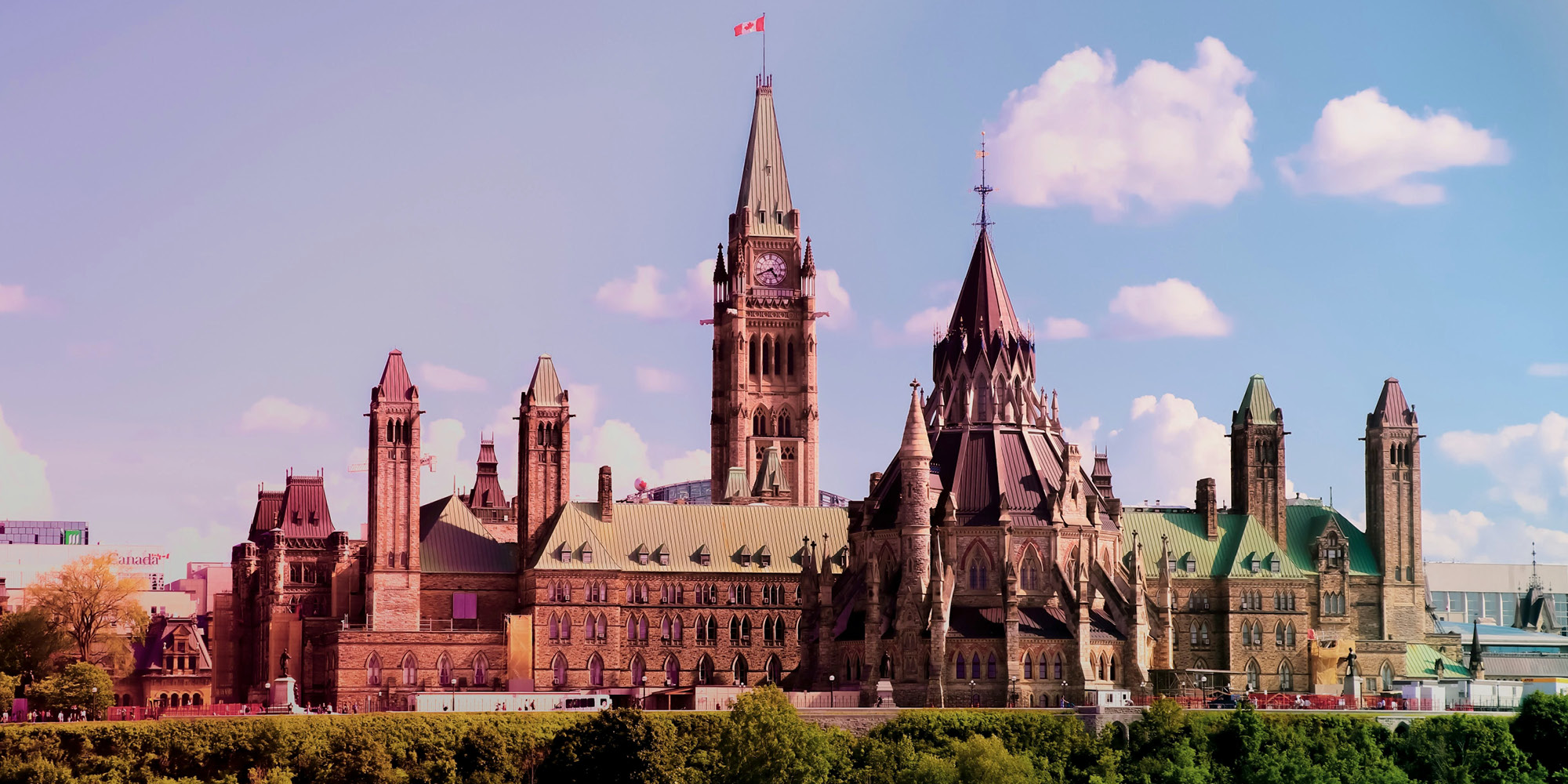
Bricks and mortar build out the federal balance sheet
The federal government rolled out a new approach to budgeting this week, and the subtext is obvious: bricks and mortar are the foundation of Prime Minister Mark Carney’s fiscal policy design.
Physical capital, tangible assets, infrastructure or “build, baby, build” – call it what you may, but it’s clear Ottawa believes that to deal with the country’s economic challenges, its fiscal power needs to prioritize the construction of things.
Which begs the question: what ever happened to all the banter about the importance of human capital, our people being our best assets and a future built on talent and skill?
If the ultimate goal is boosting Canada’s productivity, then actual people— armed with their skills, creativity and brains— need to be at the centre.
There’s a notable lack of human touch in the government’s fiscal discourse to date, and that prompts some concern about whether the taxation, spending and investment powers of the federal purse are aligned with an economy that treats its people well.
If the ultimate goal is boosting Canada’s productivity, then actual people— armed with their skills, creativity and brains— need to be at the centre.
A bit of background:
Finance Minister François-Philippe Champagne laid out the changes to budgeting this week, and they’re meant to reflect a Liberal election campaign commitment to distinguish between operational spending and long-term investment.
The technical aim is to move towards a balanced operational budget but worry less about deficits on the capital investment side of this new ledger.
“This new framework will guide decisions and help prioritize investments that generate long-term benefits for Canadians, such as major projects, housing, clean energy
and infrastructure that will help grow our economy and attract private investments,” he said in a news release.
As the argument goes, such investments will expand Canada’s ability to produce and export things, boosting Canada’s productivity and improving Canada’s standard of living – the key economic measures for quality of life.
There’s no doubt, Canada has a troubling record on productivity. Both the private and the public sector have serious work to do there.
The issue I am raising here is that Champagne’s list for what counts as a capital investment does not, by definition, include many of the programs and tax incentives that directly affect and also improve quality of life – the Canada Child Benefit, childcare, incentives to stay in the workforce, incentives to upskill and public transit, for example.
Those types of fiscal policy clearly help the country with its productivity, but don’t fall into the traditional “capital investment” category, including Champagne’s list of things that he will count. But much like financing a new road or bridge, the up-front investment in skills, training, children and public infrastructure pay off over the long term.
It’s obvious to Canadians that support for kids in their formative years, training and decent jobs is actually very productivity-enhancing, especially in the long run. But if those supports don’t make the A list for enhanced government investment, they fall into the B list for government austerity.
We will learn more in the Nov. 4 budget about whether the penchant for bricks and mortar squeezes out training, education, care and health-oriented programs that are just as important for driving prosperity, with returns that are immediately apparent to most people.
For sure, the budgetary changes improve transparency and align revenue streams behind the government’s top priorities.
But it’s hard to believe that anxious Canadians facing a no-growth economy, a trade war with the United States, rising unemployment and stubborn inequality won’t see their everyday quality of life figure prominently in Mark Carney’s fiscal to-do list. Especially because that’s the message coming loud and clear from the public right now.
Abacus pollster @davidcoletto’s numbers on national priorities this week showed that the public is deeply concerned about healthcare, housing costs and making ends meet. Infrastructure, not so much.
As Coletto writes, “Canadians are not simply worried about day-to-day costs; they’re anxious about control, fairness and their future ability to get ahead.”

Lessons from Mayor Pete on coping with uncertainty
When Democrat Pete Buttigieg was in Ottawa for the Canada 2020 dinner this week, he had some strategic advice for those who despair over the state of America and are having a hard time seeing their way to the other side of that “storm.”
While the world around us may be broken, he said, there’s not much point in trying to tape all the pieces back together and hope for a return to better times.
But the former Transport Secretary who ran, unsuccessfully, in the 2020 Democratic primaries, is certainly not counselling to give up.
Instead, he advised building new and different coalitions based on commonly shared principles. He urged meeting people where they’re at, and with respect. And he suggested showing them – not just telling them – solutions to the problems of everyday life.
We can hope that the Canadian policymakers putting together this fall’s federal budget were listening, and that they’ll take some lessons from the past and apply them creatively to the future – while meeting people where they’re at.
So far, Prime Minister Mark Carney has signaled that this year’s budget-making process is an arc between austerity and investment. Since he sees a need for both, he will split his columns between operations (where we’ll find the austerity) and capital spending (where we’ll see the investment).
And he and his cabinet have already moved to use the power of the federal purse to support the sectors of the Canadian economy hit hard by the “storm” blowing at us from south of the border.
But let’s take a look at where people are actually at.
Economic growth is stumbling along. The country’s output shrank by 1. 6 per cent in the second quarter of this year, and the third quarter looks like it was flat. Yes, that weakness was especially sharp in trade-exposed sectors. And yes, Canada has thus far avoided a deep recession. But no growth helps no one.
Economic growth is stumbling along. The country’s output shrank by 1.
6 per cent in the second quarter of this year, and the third quarter looks like it was flat. Yes, that weakness was especially sharp in trade-exposed sectors. And yes, Canada has thus far avoided a deep recession. But no growth helps no one.

Indeed, the Bank of Canada trimmed its key interest rate last week for that very reason. The bank pointed out that exports and business investment are down, and even though consumption and housing activity look healthy for now, it won’t last.
Employment is also limping. The proportion of working-age people with jobs has been eroding since the beginning of the year. In August alone, it fell by 66,000 people.
Young people find it hard to land work. The unemployment rate for workers aged 15 to 24 is now 14.5 per cent, the highest since 2010, pandemic aside. And the news is full of warnings that entry-level positions are being gobbled up by AI agents.
And the gap between rich and poor is bigger and more troubling than ever. Statistics Canada’s most recent measurement of the gap, looking at disposable income, finds it to be at a record high. Meanwhile, Canada’s wealthiest citizens pay lower tax rates than our plumbers and nurses.
Things aren’t as bad as many imagined they could be, but the people in the fragile parts of the economy need a fiscal policy that is supportive, alongside the long-term capital plans Carney has in mind.
Here’s where taking from the past can actually be helpful.
We know from recent exogenous shocks to our economy, such as the pandemic and the global financial crisis of 2008, that the central bank’s cutting of rates is a blunt instrument, whereas government spending and taxation can be used with far more finesse.
Another lesson the pandemic taught us is that boosting economic resilience in households is just as important, if not more so, than policy oriented simply towards fueling growth. If regular people are having a hard time in their everyday lives, long-term prospects for a country as a whole are on shaky ground.
But as Buttigieg says, it’s not enough to look at what worked in the past and patch it together to face the future. Economic dynamics are changing quickly and profoundly, and the tools of the past will need to be applied with caution and creativity.
The federal government’s recent $13-billion announcement on building affordable homes seems to fit the bill. It’s targeted, it uses federal lands and seeks to partner with non-profits and eventually the private sector – fiscal policy with a creative flair.
The Canadian Tax Observatory is embarking on researching options for a more calibrated tax system that meets people where they’re at, with an eye firmly fixed on the future, on the wherewithal of youth and on their ability to foster growth. And we hope the federal budget will take a similar approach.
As Buttigieg told the dinner audience this week: “All good politics takes everyday life as its departure. The longer you’re planning to be here, the more you have at stake in a set of decisions, many of them irreversible, being made in your name now.”

The Canadian Tax Observatory announces Heather Scoffield as founding CEO
The Board of Directors of the new Canadian Tax Observatory has announced the appointment of its founding CEO, Heather Scoffield. Her plans for the research and policy centre are ambitious.
“Heather Scoffield has been helping Canadians make sense of the economy for almost three decades,” said Matthew Mendelsohn, Chair of the Board. “It is sometimes hard for non-specialists to understand the nuances and implications of tax policy. I can’t think of any Canadian better placed than Heather to help Canadians make sense of the evidence and understand the implications of tax policy discussions on their own lives and on the ability of the country to meet the moment we face.“
Leading the Canadian Tax Observatory is a logical progression in Scoffield’s career, which has been devoted to driving a vigorous, informed national conversation on economic policy. Previously, she was Ottawa bureau chief at The Canadian Press, the economics columnist and Ottawa bureau chief at the Toronto Star, and most recently senior vice-president of strategy at the Business Council of Canada.
“Tax reform is in the air,” said Scoffield. “Before we attack the foundational issues inhibiting growth and fairness in Canada’s tax system, we need to ensure policymakers putting together this fall’s budget hear about the need for an equitable and efficient tax system in response to global uncertainty, tariff fallout and slow growth.”

“Our current tax system is overly complicated – the product of so much history and politics over time, with so many unintended consequences, and with rules that are no longer responding to the realities of today’s economy,” said Scoffield. “I aim to drive in-depth research that pulls apart the strands of our current system so that we can thoroughly evaluate where we are and engage Canadians in a broad discussion about how to support economic growth while improving the fairness of Canada’s tax
system.”
Over the next six months, the Observatory will connect with researchers in Canada, build alliances globally and develop its research agenda.
“Tax reform is in the air,” said Scoffield. “Before we attack the foundational issues inhibiting growth and fairness in Canada’s tax system, we need to ensure policymakers putting together this fall’s budget hear about the need for an equitable and efficient tax system in response to global uncertainty, tariff fallout and slow growth.”
The Observatory is funded through philanthropic donors, including major contributions from Social Capital Partners and the Euphrosine Foundation.
Le conseil d’administration du nouvel Observatoire canadien de la fiscalité (l’Observatoire) a annoncé aujourd’hui la nomination de sa première cheffe de la
direction, Heather Scoffield. Madame Scoffield envisage un programme de recherche et de politiques publiques des plus ambitieux.
« Heather Scoffield nous aide à comprendre l’économie depuis près de trois décennies », a fait valoir Matthew Mendelsohn, président du conseil d’administration. « Il est parfois difficile pour les non-spécialistes de saisir les nuances et les implications des politiques fiscales. Nul n’est mieux placé que Heather pour éclairer les Canadiens sur l’impact des débats fiscaux, tant dans leur quotidien que pour l’avenir collectif du pays. »
La prise de la direction de l’Observatoire canadien de la fiscalité s’inscrit logiquement dans la carrière de madame Scoffield, qui s’est investie à susciter un débat national vigoureux et éclairé sur les politiques économiques. Auparavant, elle a été cheffe du bureau d’Ottawa à la Presse canadienne, chroniqueuse économique et cheffe du bureau d’Ottawa au Toronto Star, et plus récemment, vice-présidente principale de la stratégie au Conseil canadien des affaires.
« La réforme de la fiscalité est dans l’air », a soulevé madame Scoffield. « Avant de nous attaquer aux problèmes fondamentaux qui entravent la croissance et l’équité du régime fiscal canadien, nous devons nous assurer que les décideurs politiques comprennent l’importance d’un régime fiscal
équitable et efficace, et ce, dans un contexte d’incertitude mondiale, de relations commerciales changeantes et d’une économie en lente croissance. »
« Notre système fiscal actuel est trop complexe – il est le produit d’une longue histoire et de nombreuses décisions politiques, avec de nombreuses conséquences imprévues et des règles qui ne s’inscrivent plus dans les réalités de l’économie actuelle », a fait valoir madame Scoffield. « Je souhaite mener des recherches approfondies qui sauront faire la lumière sur tous les aspects de notre régime actuel afin que nous puissions évaluer de façon exhaustive où nous en sommes et susciter la participation des Canadiens à un débat à grande échelle sur la manière de soutenir la croissance économique tout en améliorant l’équité du régime fiscal canadien. »
Au cours des six prochains mois, l’Observatoire consultera des chercheurs au pays, établira des alliances à l’échelle mondiale et mettra sur pied son programme de recherche.
« La réforme de la fiscalité est dans l’air », a soulevé madame Scoffield. « Avant de nous attaquer aux problèmes fondamentaux qui entravent la croissance et l’équité du régime fiscal canadien, nous devons nous assurer que les décideurs politiques comprennent l’importance d’un régime fiscal équitable et efficace, et ce, dans un contexte d’incertitude mondiale, de relations commerciales changeantes et d’une économie en lente croissance. »
L’Observatoire est financé par des donateurs philanthropiques, notamment par des contributions importantes de Social Capital Partners et de la Fondation Euphrosine.

Canada’s economic strategy requires a more serious focus on tax
Prime Minister Mark Carney chose his words well to describe this shocking moment in Canada’s economy.
“Rupture” is an apt way to describe what’s overwhelming us, with tariffs undercutting our exports, weak growth taking a toll on the job market and uncertainty undermining long-term investment.
“What’s going on is not a transition. It’s a rupture, and its effect will be profound,” Carney said last week, and echoed a couple of times since.
But it’s worth paying attention to the systemic problems that hover in the background giving the forces of “rupture” fertile ground – especially our convoluted, archaic and often distorted tax system that affects each and every one of us, daily, compounding slow growth, inequality and uncertain prospects for young people.
That’s why I’ve decided to join, lead and build the Canadian Tax Observatory – a new, independent, non-profit think tank dedicated to research and public engagement around tax policy.
That’s why I’ve decided to join, lead and build the Canadian Tax Observatory – a new, independent, non-profit think tank dedicated to research and public engagement around tax policy.
We will look hard, and closely, at the puzzling array of tax codes and measures already in play. And we will have an eye to finding more efficient and accessible ways to foster not just economic growth but also to confront inequality.
For sure, taxation comes up in the “rupture” conversation once in a while.
When Carney is asked how Canada will pay for the support for industries hit by American tariffs, he mostly focuses on government cuts, downplaying the role that taxation plays in covering rising government costs.
When the chattering class discusses how to finance Canada’s enormous new defence commitments, there’s an esoteric mention here and there about a dedicated tax to help fund it all, but little specificity on how to improve the tax system in a concrete way.
Carney himself has committed to tax reform. Recognizing that fair taxation is necessary to protect public institutions, the Liberal platform committed to review the system through the lenses of fairness, transparency, simplicity, sustainability and competitiveness.
That won’t be a simple exercise. It’s been decades since Canada had a holistic look at the tax system, even though the federal government alone collected $382 billion just last year.
Tax, of course, is a tool to pay for government services, but it is also a way to reward or penalize economic behaviour based on the political priorities of the day. And because every person has an opinion on taxes—usually a strong opinion—it’s rare to find a politician who dares to take a critical eye to a system built on favours.
The work needs to start now, and that’s where the Observatory comes in.
As the name suggests, the Canadian Tax Observatory will observe Canadian taxation. But that’s far from a passive exercise.
By digging deep into the data around income, wealth inequality, real estate, inheritance, investment, boutique tax incentives, tax evasion, deficits, debt, income distribution and prosperity, we aim to drive a nuanced, national discussion about what kind of economy we want in Canada—and how to pay for it in an equitable way.
Taxation can’t just be a tool to finance defence and bail out industries hurt by tariffs. It’s a complicated puzzle with many interlocking pieces that, if strategically arranged, can address inequality, foster growth, encourage innovation and enable progress in the face of climbing deficits, lackluster investment and global uncertainty.
There are no easy answers, but that doesn’t mean there are no answers. Here’s a chance to dig in—with all the data and analysis that high tech and smart brains will allow—to do solid research and push collaboratively towards solutions.
I hope you’ll join me.
– Heather